
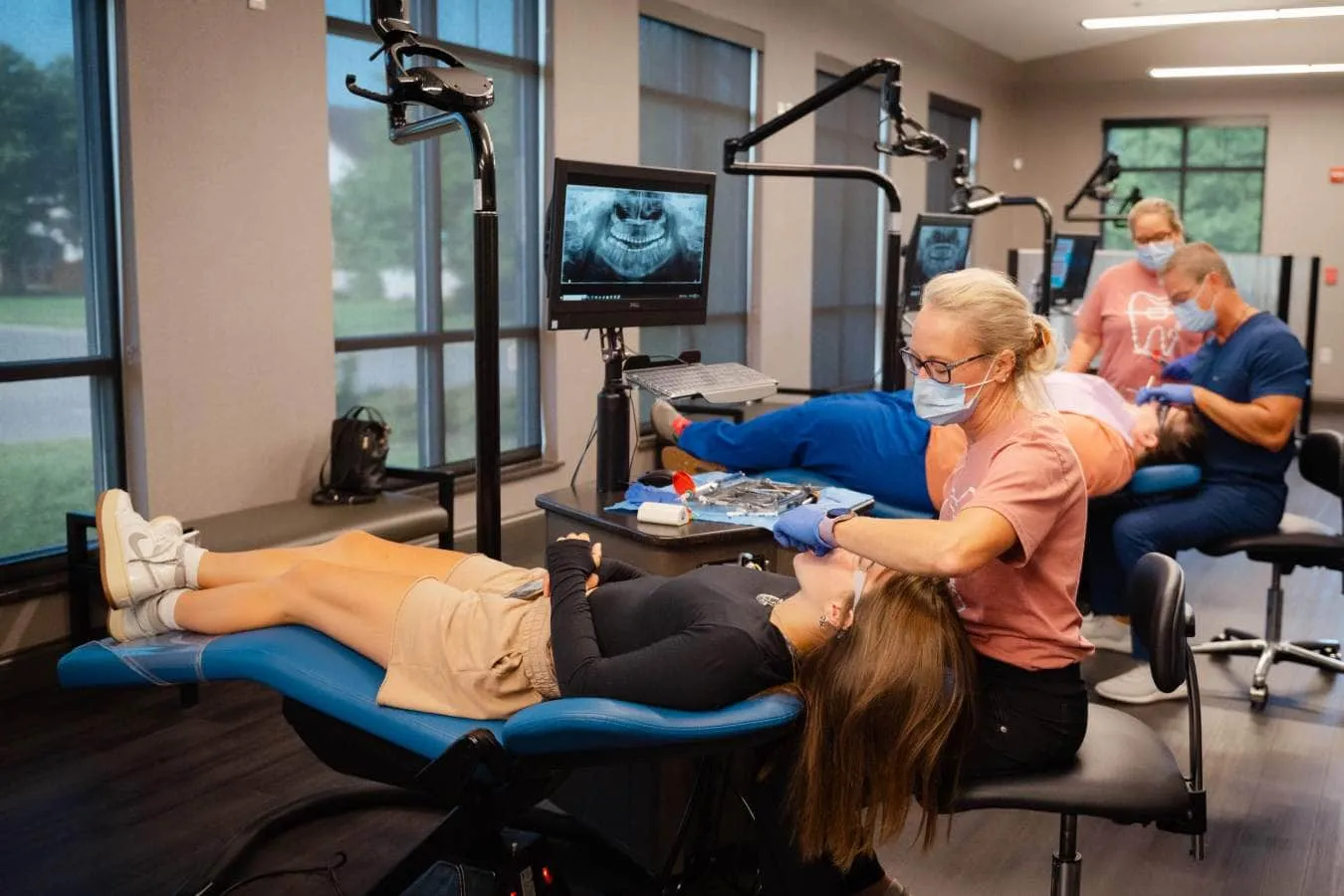
Getting braces is one of the most effective ways to create a healthy, beautiful smile that lasts a lifetime. If you’re considering orthodontic treatment for yourself or your child, you probably have questions. How do braces work? What are your options? What does the process actually look like? Knowing the answers helps you feel confident about taking the next step.
From crowded teeth to gaps to bite concerns, braces can treat many different orthodontic needs for our patients of all ages. At McCabe Orthodontics in Columbus, IN, Dr. McCabe walks you through every option and helps you find the best path forward.
What Are Braces and How Do They Straighten Your Smile?
Braces are orthodontic appliances that use brackets, wires, and bands to apply gentle, continuous pressure to teeth. Over time, this pressure gradually moves teeth into proper alignment for both children and adults. They correct crowding, spacing, overbites, underbites, crossbites, and open bites, making them one of the most versatile treatments in orthodontics.
At McCabe Orthodontics, Dr. Russell McCabe, a board-certified orthodontic specialist, treats many common orthodontic concerns, including:
- Crowding: teeth that overlap or twist due to limited space
- Spacing: gaps between teeth that affect appearance and function
- Overbites: upper teeth extending too far over the lower teeth
- Underbites: lower teeth sitting in front of the upper teeth
- Crossbites: upper and lower teeth not meeting properly
- Open bites: front teeth that don’t touch when the mouth is closed
Today’s braces are more comfortable and efficient than ever before. Bracket designs are smaller. Wires are more flexible. Treatment techniques have advanced significantly. All of that means less discomfort and often shorter treatment times compared to braces from previous decades.
Treatment is available for kids, teens, and adults alike. Dr. McCabe sees our patients at every stage of life who want to improve their smiles. Orthodontics is for everyone.
How Braces Work: What to Expect from Braces in Columbus, IN
Knowing what happens during orthodontic treatment helps you prepare for each phase of the process. Here’s how the process unfolds, from your first visit to the day your braces come off.
What Happens at Your Initial Free Consult?
Your first visit to McCabe Orthodontics includes a thorough examination of your teeth, jaw, and bite. Dr. McCabe takes X-rays and digital scans using iTero scanners to create a full picture of your oral health. This technology captures detailed 3D images without messy impressions, making the process quick and comfortable.
During this visit, you’ll discuss your smile goals and learn about recommended treatment options. Ask questions. Get clarity on timelines. This is the time to understand what braces can do for you.
How Are Your Smile Goals Mapped Out?
Based on your exam results, Dr. McCabe develops a plan built around your specific needs. This outlines which type of braces will work best, how long treatment should take, and what results you can expect. No two plans look the same, because no two smiles are the same.
What Happens on Bracket Placement Day?
When it’s time to get your braces, the process is straightforward. Your teeth are cleaned, and brackets are bonded to each tooth using a special adhesive. Then, the archwire is threaded through the brackets and secured. The entire visit usually takes about an hour. Most people say it’s easier than they expected.
How Often Will You Need Adjustment Visits?
You’ll return to our practice every four to eight weeks for adjustments. During these visits, Dr. McCabe tightens or replaces wires to continue guiding your teeth into position. These are quick visits, typically around 20 to 30 minutes.
What Does the Retention Phase Look Like?
Once your braces come off, you’ll wear retainers to keep your teeth in their new positions. This phase is crucial for maintaining your results long-term. Most of our patients wear retainers full-time initially, then transition to nighttime wear. Skipping this step can undo months of progress, so stick with it.
Average treatment time ranges from 12 to 24 months, though this varies based on the complexity of your case and how well you follow care instructions.
What Braces Do Beyond Straightening Your Teeth
While a beautiful smile is often the main motivation for getting braces, the benefits reach well beyond appearance. Here’s what orthodontic treatment can do for your overall health and quality of life.
How Does Bite Alignment Affect Daily Function?
When your teeth and jaw align properly, you can chew food more effectively and put less strain on your jaw joints. Our patients with bite concerns often experience jaw soreness, headaches, or TMJ discomfort. Correcting alignment often reduces or eliminates these concerns entirely.
Why Are Straight Teeth Easier to Keep Clean?
Crooked or crowded teeth create tight spaces where plaque and bacteria hide. Those areas are tough to reach with regular brushing and flossing, no matter how diligent you are. Straighter teeth are easier to keep clean, which lowers your risk of cavities and gum disease over time.
Can Braces Improve Speech Clarity?
Tooth and jaw alignment affects how you form certain sounds. Some of our patients notice clearer speech after orthodontic treatment, particularly if they had significant bite concerns or gaps. It’s a benefit people don’t always expect, but it makes a real difference.
What About Confidence?
Loving your smile changes how you show up. In social situations, job interviews, photos, even everyday conversations. That confidence boost impacts many areas of life in ways that are hard to quantify but easy to feel. Dr. McCabe and our team see this kind of change regularly with our patients at McCabe Orthodontics.
Will Results Last?
Unlike some cosmetic treatments that need frequent touch-ups, braces create structural changes that last. With proper retention, your straighter smile can stay with you for life. That’s a long-term return on a relatively short investment of time.
According to the American Association of Orthodontists, orthodontic treatment improves not just appearance but also dental function and overall oral health.
Types of Braces Compared: Metal, Ceramic, Lingual & Clear Aligners
Not all braces look or work the same way. Understanding your options helps you choose the treatment that fits your lifestyle and smile goals.
| Braces Type | Visibility | Best For | Considerations |
|---|---|---|---|
| Traditional Metal | Most visible | Complex cases, all ages | Most affordable, highly durable |
| Ceramic | Less visible (tooth-colored) | Teens and adults wanting discretion | Slightly higher cost, requires careful cleaning |
| Lingual | Nearly invisible (behind teeth) | Adults wanting hidden treatment | Higher cost, adjustment period for speech |
| Clear Aligners | Removable, clear trays | Mild to moderate cases | Requires discipline to wear consistently |
What Makes Traditional Metal Braces So Popular?
There’s a reason metal braces remain the most common option: they work. Made of high-grade stainless steel, they handle even the most complex orthodontic cases effectively. Today’s metal brackets are smaller and more comfortable than older versions. Kids and teens especially enjoy customizing their look with colored bands, turning treatment into a form of self-expression.
Are Ceramic Braces a Good Alternative?
If you want the mechanics of traditional braces with a subtler look, ceramic braces are worth considering. The tooth-colored or clear brackets blend with your teeth, making them less noticeable. Adults and teens tend to gravitate toward this option. One thing to keep in mind: the brackets are slightly larger than metal ones and need careful cleaning to prevent staining.
Who Should Consider Lingual Braces?
Placed on the back surfaces of your teeth, lingual braces are virtually invisible from the front. For adults who need orthodontic treatment but prefer that nobody knows, this is the go-to choice. Speech may feel slightly different for the first week or two as your tongue adjusts, but most people adapt quickly.
When Do Clear Aligners Work Best?
Clear aligners like Invisalign use a series of removable plastic trays to shift teeth gradually. They’re nearly invisible, and you can take them out to eat and brush. That flexibility is a big reason they’re so popular. Aligners work well for mild to moderate cases. More complex concerns may still call for traditional braces, so an honest evaluation from Dr. McCabe is the best starting point.
Dr. McCabe will evaluate your unique situation to recommend the best option. During your free consult at McCabe Orthodontics, you’ll learn which type of braces will give you the results you’re looking for.
How Much Do Braces Cost? Key Factors That Affect Price
The cost of braces typically ranges from $3,000 to $7,000, depending on the type of braces, treatment complexity, duration, and individual needs. Because these factors vary so much from patient to patient, scheduling a free consult is the best way to understand pricing for your specific situation.
What Influences the Price?
Type of braces: Metal braces are typically the most affordable, while lingual braces and clear aligners often cost more due to specialized materials and techniques.
Treatment complexity: More severe misalignment or bite concerns require longer treatment times and more adjustments, which affects overall cost.
Treatment duration: Longer treatment naturally involves more visits and materials.
Your specific needs: Some of our patients need additional appliances or procedures as part of their smile goals.
How Can You Make Treatment Affordable?
Many dental insurance plans cover a portion of orthodontic treatment, particularly for children and teens. Our team at McCabe Orthodontics in Columbus, IN can help you understand your benefits and maximize your coverage.
We offer interest-free, in-office financing with low monthly payment options that fit your budget. Our all-inclusive fees mean no hidden charges for common needs like loose brackets or routine X-rays. That’s another sign of a practice that’s upfront about costs from the start.
A free consult is the best way to get an accurate estimate for your situation. During this visit, you’ll discuss all costs, payment options, and insurance benefits so you can make an informed decision. No surprises.
Who Is a Good Candidate for Braces?
One of the most common questions Dr. McCabe hears is “Am I too old for braces?” The answer is almost always no. Braces work effectively at any age. No age limit.
When Should Children Get an Orthodontic Evaluation?
The American Association of Orthodontists recommends children have their first orthodontic evaluation by age 7. At this age, a board-certified orthodontic specialist like Dr. McCabe can identify potential concerns early and determine if early intervention would benefit your child. Some concerns are easier to correct while the jaw is still growing.
Not every child needs early treatment. Many kids simply benefit from monitoring until their permanent teeth come in. Our complimentary pre-orthodontic growth and development program helps track your child’s progress so treatment can begin at the ideal time.
Why Is Adolescence the Most Common Time for Braces?
Adolescence is the most popular window for braces. Most permanent teeth have erupted, but the jaw is still developing, creating ideal conditions for treatment. Teens often adapt quickly to braces and enjoy choosing colored bands to express their personality.
Can Adults Get Braces Too?
Absolutely. Adults of all ages can enjoy straighter, healthier smiles. Whether you never had braces as a kid or your teeth have shifted over time, orthodontic treatment can help. Ceramic braces and clear aligners are popular among adults who want a more discreet look. At McCabe Orthodontics in Columbus, IN, we treat adults every day.
What Conditions Make Someone a Good Candidate?
Good candidates include anyone with crowded or overlapping teeth, gaps between teeth, overbite, underbite, or crossbite, jaw misalignment, or teeth that don’t meet properly when biting. An orthodontic evaluation is the first step to finding out if braces are right for you. This exam includes clinical assessment and imaging to understand your specific situation.
Frequently Asked Questions About Braces
Do braces hurt?
Most of our patients experience mild soreness after getting braces and following adjustment visits. This discomfort typically fades within a few days as your mouth adjusts. Over-the-counter pain relievers and soft foods can help during this time. Our team will walk you through managing any initial discomfort, and most people say it’s much less than they expected.
How long does braces treatment take?
Treatment duration varies based on the complexity of your case, but most of our patients wear braces for 12 to 24 months. Simpler cases may finish sooner, while more complex concerns might take longer. Following Dr. McCabe’s instructions, including wearing rubber bands as directed, helps keep treatment on track and may shorten overall duration.
Can adults get braces?
Yes. Braces work effectively for adults of all ages. Healthy teeth can be moved at any stage of life. Many adults in Columbus, IN choose ceramic braces or clear aligners for a less noticeable appearance while still achieving excellent results. Dr. McCabe treats adults regularly at McCabe Orthodontics.
What foods should I avoid with braces?
Hard, sticky, and chewy foods can damage brackets or get stuck in your braces. Skip things like popcorn, hard candy, caramel, gum, and ice. Cut crunchy fruits and vegetables into smaller pieces, and avoid biting directly into foods like apples or corn on the cob. Our team will give you a full list at your bracket placement visit.
How often are adjustment visits?
You’ll visit our Columbus, IN practice every four to eight weeks for adjustments. These visits are essential for progressing your treatment. Dr. McCabe is chairside at every visit, which ensures you receive expert care and attention throughout your treatment.
Will I need to wear a retainer after braces?
Yes, retainers are an important part of maintaining your results. After your braces come off, you’ll wear retainers to keep your teeth in their new positions. Most of our patients wear them full-time initially, then transition to nighttime wear. It’s a small commitment for a lasting result.
If you’re considering braces for yourself or your child, the best next step is scheduling a free consult with Dr. McCabe at McCabe Orthodontics in Columbus, IN. He’ll evaluate your specific needs and walk you through your options. The right smile goals start with the right conversation, and we can’t wait to get started!